
Vertebrate parasites in the world of invertebrates
In the world of parasites, insects, worms, or microscopic organisms are most often mentioned. However, there are much rarer forms of parasitism in the ocean. One such example is the fish Encheliophis gracilis, known as the graceful pearlfish. It is a vertebrate parasite that uses invertebrate marine animals as its habitat and food source.
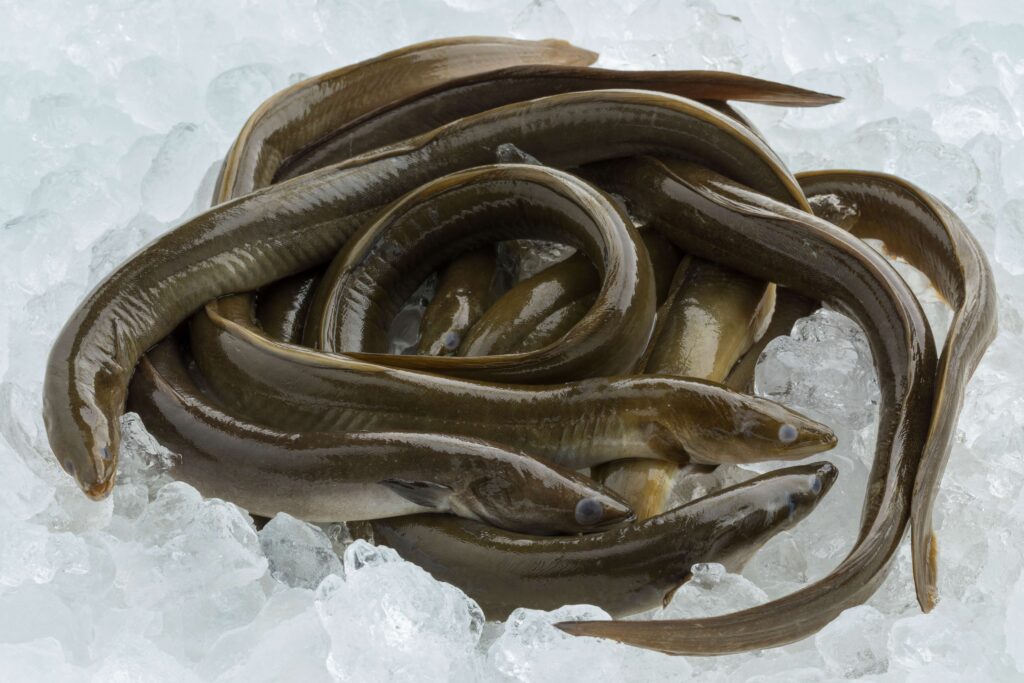
This fish belongs to the Carapidae family. Members of this group resemble thin eel-like fish about fifteen centimeters long. Their bodies are flexible and elongated, allowing them to easily penetrate the internal cavities of other organisms. The main host for Encheliophis gracilis is the sea cucumber, which is widespread in warm seas.
Most related pearlfish use sea cucumbers as shelter. They hide inside during the day and come out at night to feed on small marine organisms. This lifestyle is more like temporary cohabitation than parasitism. Encheliophis gracilis has chosen a different path and has completely adapted to living off its host.
Features of the parasitic lifestyle
Unlike other species, Encheliophis gracilis spends almost all of its time inside the sea cucumber’s body. The fish settles near the internal organs and obtains food directly from the host’s tissues. It bites off small pieces of the gills and gonads, which provides constant access to energy and a protected space.
Key features of this lifestyle include:
- Constant residence inside the host’s body
- Feeding on sea cucumber tissue
- No need to leave the shelter to search for food
- The ability of several fish to coexist in one organism
This type of parasitism makes the fish a rare example of a vertebrate parasite that is completely dependent on an invertebrate host.
The sea cucumber’s reaction to the presence of the parasite is interesting. These animals have a defense mechanism whereby they can eject their internal organs in response to a threat. This usually helps to get rid of the danger. In the case of pearlfish, this reaction is almost never observed, even after prolonged coexistence.
Scientists are considering several possible explanations. Perhaps the damage remains at a level that the host’s body is able to compensate for. There is also a hypothesis about the fish’s influence on the sea cucumber’s nervous regulation. These hypotheses continue to be studied.
From a scientific point of view, Encheliophis gracilis is interesting for several reasons:
- It demonstrates parasitism among vertebrates
- It shows complex forms of adaptation in marine ecosystems
- It helps to better understand the evolution of relationships between species
The study of such organisms broadens our understanding of the biological diversity of the ocean.
Encheliophis gracilis clearly shows that parasitic strategies are found even in fish and can take very specialized forms.