

The Parasite Museum as a space for science and education
The Parasite Museum in Tokyo is a rare example of a place where science becomes accessible to a wide audience. It is located in the Meguro district and combines a research center and an open public museum. Most of the building is devoted to laboratories, a scientific library, and specimen storage, but the first two floors are entirely dedicated to an exhibition that anyone can visit for free.
This museum is an important attraction for those interested in biology, medicine, and evolution. It houses a collection of tens of thousands of parasite specimens, including unique specimens used in scientific research around the world. The public part of the museum helps visitors understand the place of parasites in nature and why their study is important for human health and ecosystems.
How the museum exhibition is organized
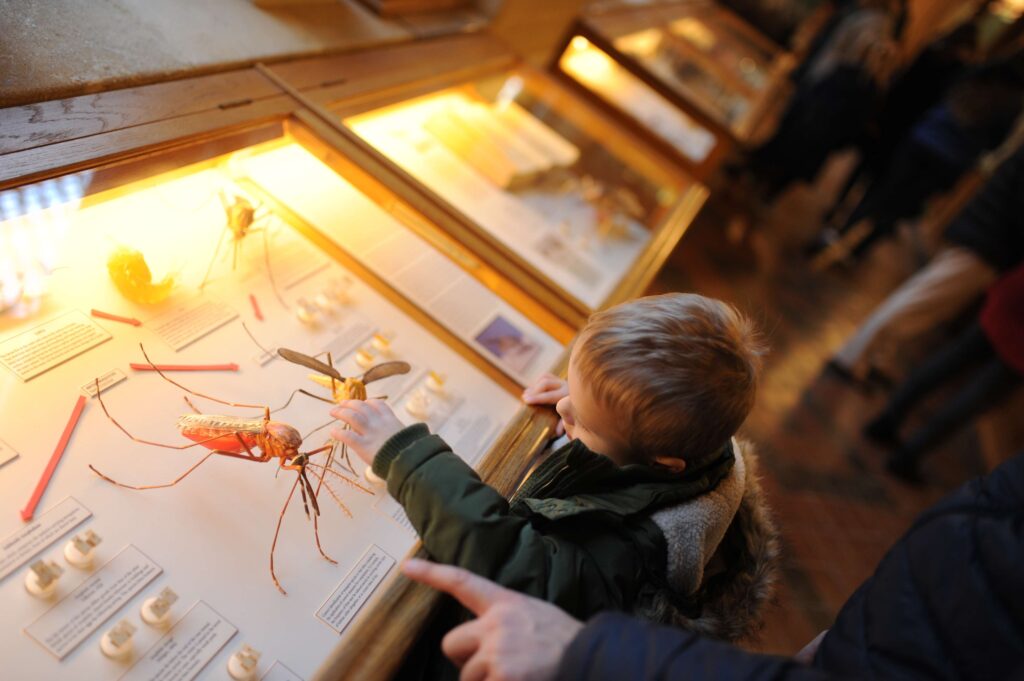
The museum’s exhibition is designed so that even people without special training can gradually immerse themselves in the subject. The first floor introduces the basics of parasitology. Here, they explain what parasites are, what groups they form, and how they interact with their hosts. Visitors learn about the ecology of parasites and their diversity in nature.
The second floor is dedicated to the life cycles of parasites. Special attention is paid to species that affect human health. The information is presented through diagrams, illustrations, and real-life examples, which helps to better understand complex biological processes.
The exhibition features:
- Classification of parasites by group
- Examples of life cycles from egg to adult form
- Ways of transmitting parasites between organisms
- The effect of parasites on the tissues and organs of the host
This approach makes the museum understandable and interesting for schoolchildren, students, and adult visitors.
Real specimens as the basis for impressions
The museum’s main feature is the use of real specimens. Most of the exhibits are presented in jars, Petri dishes, or transparent blocks. Some specimens are mounted on stands, allowing visitors to see their size and shape. There are also preserved exhibits in the host’s tissues that show how the parasite affects the body from within.
One of the most memorable exhibits is a long tapeworm extracted from a human body. Such examples make a strong impression and help to understand the scale and reality of the problem of parasitic diseases. Thanks to the real objects, the museum is perceived as a scientific space rather than an abstract exhibition.
A visit to the museum is especially interesting for children and teenagers. Their emotional reaction to the exhibits often enhances the memorability of the information and piques interest in biology.
Practical information for visitors
The museum is located within walking distance of Meguro Station in Tokyo. It is easy to include in a city walking tour. It is open from Tuesday to Sunday during the day. There are simple rules of conduct inside to help preserve the exhibits and ensure comfort for all visitors.
Before visiting, it is useful to know that:
- The museum functions as a research center and public exhibition
- Admission is free for all visitors
- The halls contain real specimens of parasites
- There is a gift shop on site with themed items
The Parasite Museum serves an important educational function. It shows that even organisms that seem unpleasant at first glance play a significant role in science and medicine. Such a place helps foster interest in research and broadens our understanding of the world’s biological diversity.